Pandas 实现系统抽样:方法、代码示例与应用
发布日期 :2024-10-26 19:12:14 UTC
访问量: 20 次浏览
Pandas的系统取样
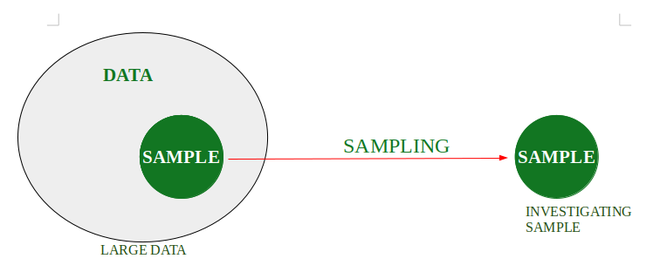
抽样是一种从给定数据中抽取子集(样本)并对样本进行分析的方法,而无需调查数据中的每一条记录。 例如,假设在一所大学里,有人想了解该校学生的平均身高。一种方法是收集所有学生的数据进行计算,但非常耗时。 因此,可以采用抽样方法:在课间休息时从食堂随机选择学生,测量身高,然后从这个子集计算出平均身高的估计值。
取样类型:
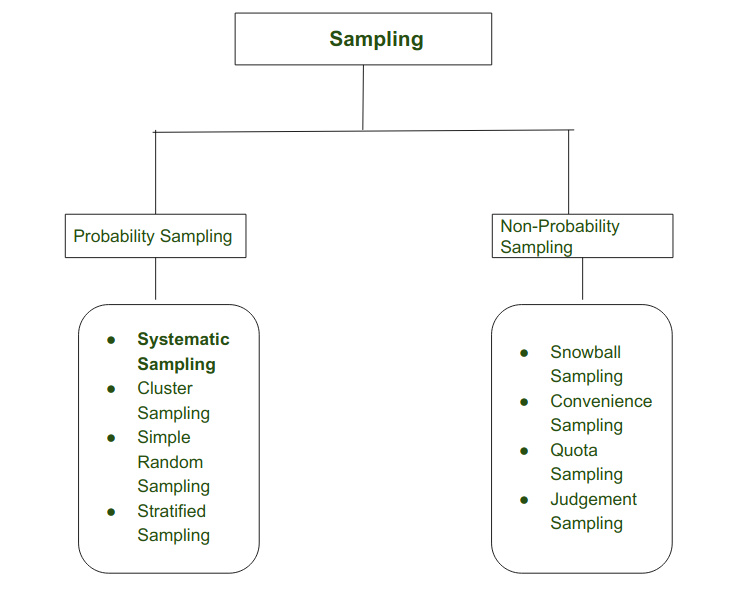
抽样类型
系统取样
系统抽样是一种概率抽样方法,研究者可以从大量数据中抽取目标数据。 具体方法是通过选择随机起点,然后按固定的时间间隔选择下一个元素作为样本。这样,从大数据中提取出一个小的子集(样本)来进行分析。
假设数据的大小是 D,N 是我们要选择的样本大小。因此,根据系统抽样法:
Interval = (D / N)
假设 (D / N) = J
因此,当我们从数据中选择第一个随机元素 E 时,样本的下一个元素将是 (E + J)。
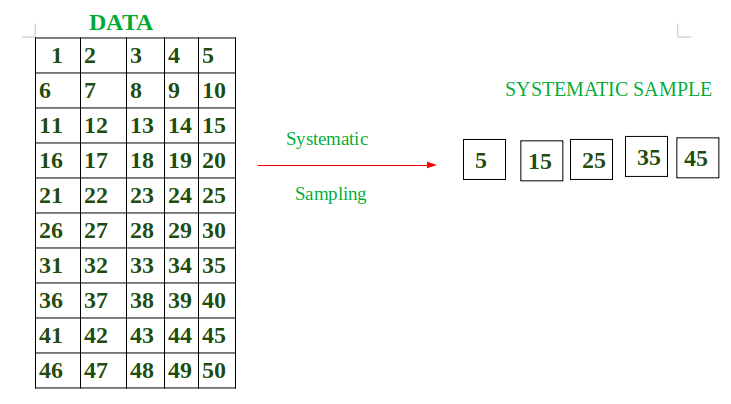
例如:数据总大小 = 50(1 到 50)。
我们希望样本中的元素个数 = 5
间隔 = 50 / 5 = 10。
这意味着我们要每隔 10 个元素取一个样本。
假设我先随机选择元素,样本第一个元素 = 5
那么下一个将是 5 + 10 = 15
15 + 10 = 25
25 + 10 = 35
35 + 10 = 45
因此,
样本 = { 5, 15, 25, 35, 45 }
示意图如下:
步骤:
- 获取数据。
- 从大数据中提取系统样本。
- 打印样本数据的平均值。
代码:
# Import in order to use inbuilt functions
import numpy as np
import pandas as pd

# Define total number of students
number_of_students = 15

# Create data dictionary
data = {'Id': np.arange(1, number_of_students+1).tolist(),
        'height': [159, 171, 158, 162, 162, 177, 160, 175,
                   168, 171, 178, 178, 173, 177, 164]}

# Transform dictionary into a data frame
df = pd.DataFrame(data)

display(df)

# Define systematic sampling function
def systematic_sampling(df, step):

    indexes = np.arange(0, len(df), step=step)
    systematic_sample = df.iloc[indexes]
    return systematic_sample


# Obtain a systematic sample and save it in a new variable
systematic_sample = systematic_sampling(df, 3)

# View sampled data frame
display(systematic_sample)
输出:
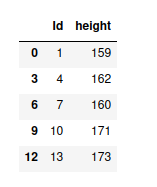
例子: 打印样本数据的平均值
# Import in order to use inbuilt functions
import numpy as np
import pandas as pd

# Define total number of students
number_of_students = 15

# Create data dictionary
data = {'Id': np.arange(1, number_of_students+1).tolist(),
        'height': [159, 171, 158, 162, 162, 177, 160, 175,
                   168, 171, 178, 178, 173, 177, 164]}

# Transform dictionary into a data frame
df = pd.DataFrame(data)


# Define systematic sampling function
def systematic_sampling(df, step):

    indexes = np.arange(0, len(df), step=step)
    systematic_sample = df.iloc[indexes]
    return systematic_sample


# Obtain a systematic sample and save it in a new variable
systematic_sample = systematic_sampling(df, 3)

# View sampled data frame
display(systematic_sample)

# Empty Print Statement for new line
print()

# Save the sample data in a separate variable
systematic_data = round(systematic_sample['height'].mean())
print("Average Height in cm: ", systematic_data)
输出:
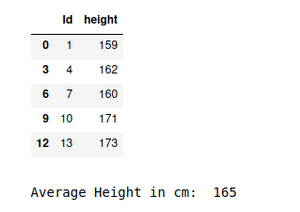
系统性抽样的类型
系统性抽样有三种类型,如下图所示。
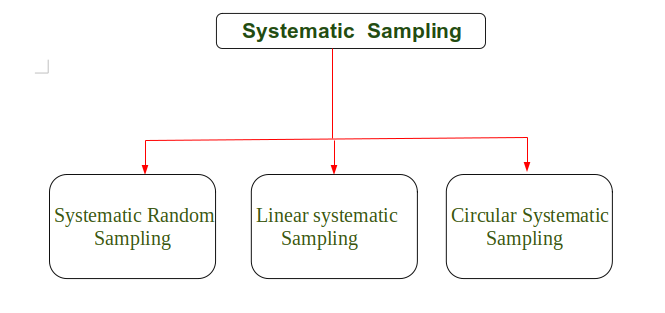
系统性抽样的三种类型
系统性随机抽样
在系统随机抽样中,选择随机起点,然后从该随机起点开始进行系统抽样。
步骤:
- 获取数据
- 选择一个随机的起始点
- 应用系统的方法处理数据
- 按计划进行操作
示例:
# Import in order to use inbuilt functions
import numpy as np
import pandas as pd
import random

# Define total number of house
number_of_house = 30

# Create data dictionary
data = {'house_number': [1, 2, 3, 4, 5, 6, 7, 8, 9, 10, 11, 12, 13,
                         14, 15, 16, 17, 18, 19, 20, 21, 22, 23,
                         24, 25, 26, 27, 28, 29, 30],
        'number_of_children': [2, 2, 1, 3, 2, 1, 4, 1, 3, 5, 4, 3, 5,
                               3, 2, 1, 2, 3, 4, 5, 3, 4, 5, 2, 2, 2,
                               2, 3, 2, 1]}

# Transform dictionary into a data frame
df = pd.DataFrame(data)

# Defining Size of Systematic Sample
size_of_systematic_sample = 6

# Defining Interval(gap) in order to get required data.
interval = (number_of_house // size_of_systematic_sample)

# Choosing Random Number
random_number = random.randint(1, 30)

# Define systematic sampling function
def systematic_sampling(df, step):

    indexes = np.arange(random_number, len(df), step=step)
    systematic_sample = df.iloc[indexes]
    return systematic_sample


# Obtain a systematic sample and save it in a new variable
systematic_sample = systematic_sampling(df, interval)

# View sampled data frame
display(systematic_sample)

# Empty Print Statement for new line
print()

# Save the sample data in a separate variable
systematic_data = round(systematic_sample['number_of_children'].mean())

# Printing Average Number of Children
print("Average Number Of Childrens in Locality: ", systematic_data)
输出:
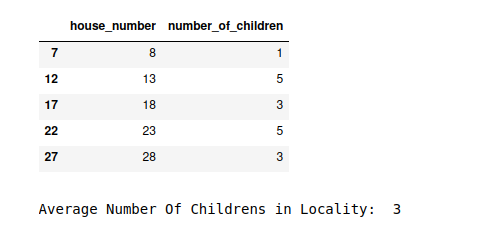
线性系统抽样
线性系统抽样是系统抽样的一种类型,样本的选择采用线性方法。线性方法的意思是,在特定的时间间隔后,从大数据中选择样本,然后对所选样本进行操作。
这些元素在 starting_random_number 到 last_element - 1 的范围内选择。
步骤:
- 获取数据
- 从数据集中选择特定时间间隔后的数据
- 按计划进行操作
示例:
# Import in order to use inbuilt functions
import numpy as np
import pandas as pd
import random

# Define total number of boxes
number_of_boxes = 30

# Create data dictionary
data = {'Box_Number': [1, 2, 3, 4, 5, 6, 7, 8, 9, 10, 11, 12, 13, 14,
                       15, 16, 17, 18, 19, 20, 21, 22, 23, 24, 25, 26,
                       27, 28, 29, 30],

        'Defective_Bulbs': [2, 2, 1, 0, 2, 1, 0, 1, 3, 5, 4, 3, 5, 3,
                            0, 1, 2, 0, 4, 5, 3, 4, 5, 2, 0, 3, 2, 0,
                            5, 4]}

# Transform dictionary into a data frame
df = pd.DataFrame(data)


# Size of Systematic Sample
size_systematic_sample = 5

# Interval (Gap) taken
interval = (number_of_boxes // size_systematic_sample)

# Choosing Random Starting Point
random_number = random.randint(1, 30)

# Define systematic sampling function
def systematic_sampling(df, step):

    indexes = np.arange(random_number, len(df)-1, step=step)
    systematic_sample = df.iloc[indexes]
    return systematic_sample


# Obtain a systematic sample and save it in a new variable
systematic_sample = systematic_sampling(df, interval)

# View sampled data frame
display(systematic_sample)

# Empty Print Statement for new line
print()

# Save the sample data in a separate variable
systematic_data = round(systematic_sample['Defective_Bulbs'].mean())

# Printing Average Number of Defective Bulbs
print("Average Number Of Defective Bulbs: ", systematic_data)
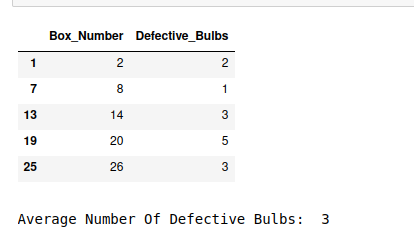
输出:
循环系统抽样
在循环系统抽样中,当选取到数据末尾时,会回到开头继续选择,直到选完所有需要的样本元素。这意味着所有数据都被循环遍历,形成一个环形选择过程。
步骤:
- 获取数据
- 系统地选择样本
- 一旦达到终点,重新从头开始
- 按计划进行操作
代码:
# Import in order to use inbuilt functions
import numpy as np
import pandas as pd
import random

# Define total number of house
number_of_house = 30

# Create data dictionary
data = {'house_number': [1, 2, 3, 4, 5, 6, 7, 8, 9, 10, 11, 12, 13,
                         14, 15, 16, 17, 18, 19, 20, 21, 22, 23,
                         24, 25, 26, 27, 28, 29, 30],
        'number_of_Adults': [2, 2, 5, 3, 2, 8, 4, 7, 8, 5, 4, 9, 5,
                             4, 2, 3, 2, 3, 4, 5, 6, 4, 5, 4, 2, 6,
                             2, 3, 2, 2]}

# Transform dictionary into a data frame
df = pd.DataFrame(data)

# Defining Size of Systematic Sample
size_of_systematic_sample = 6


# Defining Interval(gap) in order to get required data.
interval = (number_of_house // size_of_systematic_sample)

# Define systematic sampling function
def systematic_sampling(df, step):
    indexes = np.arange(0, len(df), step=step)
    systematic_sample = df.iloc[indexes]
    return systematic_sample


# Obtain a systematic sample and save it in a new variable
systematic_sample = systematic_sampling(df, interval)

# View sampled data frame
display(systematic_sample)


# Empty Print Statement for new line
print()

# Save the sample data in a separate variable
systematic_data = round(systematic_sample['number_of_Adults'].mean())

# Printing Average Number of Children
print("Average Number Of Adults in Locality: ", systematic_data)
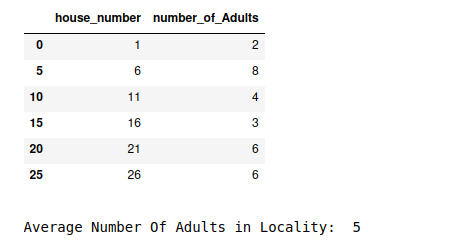
输出: